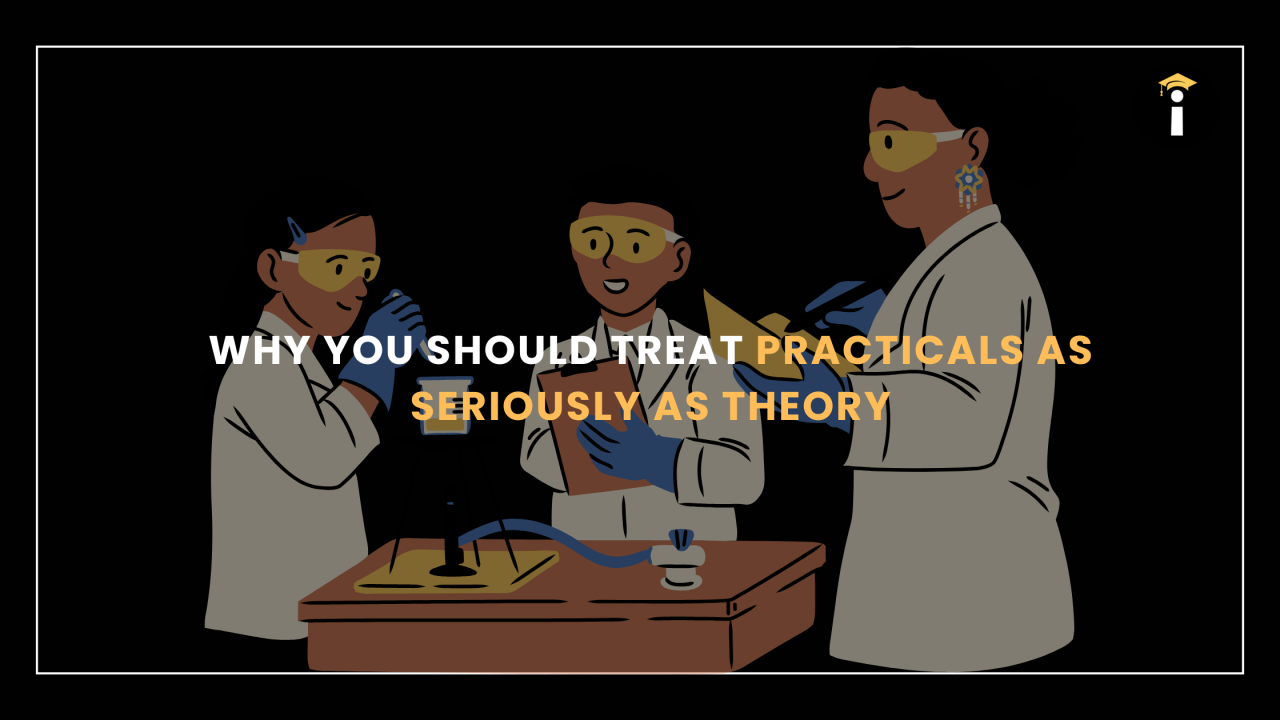
Why You Should Treat Practical as Seriously as Theory
When exam season arrives, most PU students lock in on textbooks, notes, and theory subjects while practical quietly slip into the background. “I’ll manage somehow,” or “It’s just 30 marks,” becomes the usual mindset. But here’s the truth: practical are not just formality they’re your marks, your skillset, and your confidence all in one.
In Science and Computer streams, practical exams are a core part of the curriculum, not an add-on. Treating them casually can leave you underprepared—not only for board exams but also for CET and college-level labs later on.
Here are 5 big reasons why you should take your practical just as seriously as your theory and how Parikshe can help you prepare smartly.
1. Practical Hold More Weight Than You Think
Each practical subject in PU—Physics, Chemistry, Biology, or Computer Science has a 30-mark practical component, which is internally assessed but externally moderated. That’s up to 25% of your total subject marks. If your theory paper doesn’t go well, your practical marks can either save you or sink you.
Watch Parikshe’s full walkthrough videos for every major practical experiment. Visual memory of procedures improves your recall and reduces lab-time panic.
2. Viva Questions Are Where Many Students Struggle
The moment the examiner asks, “Why did you use a voltmeter in this setup?”, many students freeze. Viva-voce isn’t just about definitions it tests whether you’ve understood the experiment. It’s one thing to follow a procedure, another to explain it logically.
Use the dedicated viva prep videos from Parikshe where teachers walk through expected questions with answers in simple Kannada great for building last-minute confidence.
3. Lab Work Deepens Conceptual Clarity
When you perform Ohm’s Law or titration or DNA extraction in a lab, you understand the concept more deeply than by just reading it. It helps you retain theory better and even improves your performance in CET, where many questions are practical in nature.
Also, students who take practical seriously often say they remember concepts longer even beyond exams because they’ve seen them in action. Try watching the related concept video on Parikshe before and after doing a lab experiment. It creates a strong visual and logical connection between theory and practice.
4. Internal Marks and Lab Record Carry Weight
Attendance, punctuality, lab notebook submissions, and your seriousness during practical classes – all of these contribute to internal assessment marks. Internal marks are sent to the board and are rarely changeable. A late lab record or poor attitude during the exam can silently affect your final score.
Follow along with Parikshe’s lab record sample formats and videos to ensure your writing, diagrams, and observation tables are neat, complete, and accurate.
5. Practical Skills Prepare You for CET, College, and Careers
Practical understanding is not just for scoring marks it prepares you for real-world applications. Engineering labs, B.Sc courses, or even entrance exams like CET involve a basic understanding of experimental logic. Whether it’s circuits, chemical reactions, or program logic in CS, your lab experiences build a strong foundation.
With both board and CET-focused video playlists, Parikshe helps you apply your practical learning to multiple exam formats not just viva.
Treating practical casually is a mistake many students realize too late. These sessions are not “easy marks” or side work, they’re essential for your overall performance and future studies. The best part? You don’t have to panic or cram last-minute. Just be consistent, stay curious, and use the right support to build confidence step by step.
With expert-backed resources, Kannada-based explanations, and lab-friendly walkthroughs, Parikshe makes practical exam preparation clear, simple, and stress-free.
Subscribe to PUC@Parikshe today and start mastering both theory and practical with the support you deserve.